
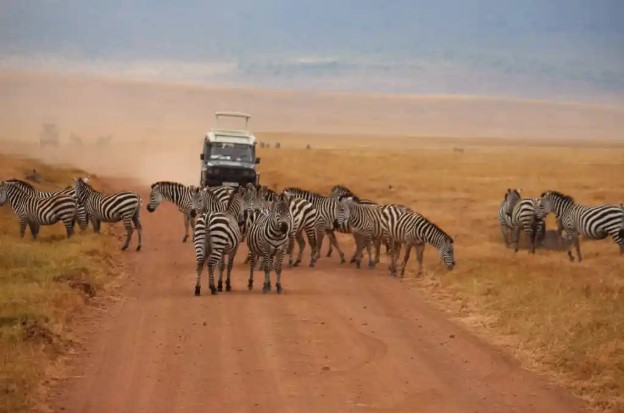

Africa whispers promises of adventure through ancient landscapes where life operates according to rules unchanged since the dawn of time. Nowhere do these whispers become roars quite like they do in Tanzania, where safaris transport you into realms that exist beyond civilization’s reach. Here, in protected wilderness spanning millions of hectares, wildlife thrives in numbers that stagger comprehension, landscapes inspire awe through their raw beauty, and every sunrise brings fresh possibilities for encounters that will mark your soul forever.
Safaris in Tanzania occupy a special place in the hearts of those who’ve experienced them. Veterans speak reverently about moments that transcended typical travel—the first time they watched a lion pride working in perfect coordination, the overwhelming emotion of witnessing their first elephant herd, or the spiritual experience of sitting in the wilderness as dawn painted the Serengeti in impossible colors. These aren’t manufactured experiences or carefully staged performances. They’re authentic encounters with nature operating on its own terms, creating moments of genuine wonder that remind us why wilderness matters.
The decision to pursue safaris in Tanzania represents choosing authenticity over convenience, selecting substance over superficiality, and prioritizing experiences that challenge and transform over those that merely entertain. Tanzania demands nothing less than your full presence—the early morning wake-up calls before dawn, the bumpy roads that shake every bone, the patience required when animals don’t appear on schedule, and the surrender to natural rhythms rather than human timetables. In return, Tanzania offers gifts beyond measure: perspectives on life that only wilderness can provide, appreciation for nature’s complexity that only direct observation can instill, and memories powerful enough to sustain you through a lifetime.
Why Safaris in Tanzania Capture Hearts Worldwide
The magnetic appeal of safaris in Tanzania among global travelers stems from attributes that extend beyond simple wildlife abundance to encompass deeper qualities that resonate emotionally and intellectually with visitors seeking meaningful experiences rather than passive entertainment.
Authenticity forms the cornerstone. Tanzania hasn’t succumbed to the temptation to make wilderness “easier” through excessive development, artificial feeding stations, or over-habituation of wildlife. The animals you’ll encounter during safaris in Tanzania remain genuinely wild—they hunt when hungry, rest when tired, and behave according to instinct rather than human schedules. This authenticity means your presence matters little to them beyond being a potential threat or curiosity, creating encounters that feel privileged rather than expected. You’re entering their world rather than them performing in yours.
Scale overwhelms modern sensibilities accustomed to contained, manageable experiences. The Serengeti alone encompasses territory larger than Connecticut. During migration peaks, wildebeest herds stretch from horizon to horizon in living rivers that take hours to pass a single point. Elephant congregations in Tarangire number in hundreds. Lion prides in Ngorongoro maintain territories covering dozens of square kilometers. This immensity creates experiences that humble rather than merely impress, reminding visitors of nature’s power and humanity’s relative insignificance in Earth’s grand tapestry.
Diversity ensures constant discovery during safaris in Tanzania. Within a single week, you’ll transition from volcanic highlands to lowland plains, from dense forests to open grasslands, from permanent rivers to seasonal wetlands. Each ecosystem hosts specialized wildlife communities—species that thrive in specific conditions and exist nowhere else in your safari circuit. This variety prevents monotony while revealing how evolutionary processes have shaped different adaptations for different environments, creating natural laboratories demonstrating biology’s creative responses to varied challenges.
Quality of expertise elevates safaris in Tanzania beyond simple wildlife viewing into educational journeys. The guides leading your adventures represent generations of accumulated knowledge—many trained by legendary guides who themselves learned from pioneers of East African safari tourism. These professionals don’t merely point out animals; they interpret behaviors, explain ecological relationships, share conservation challenges, and translate observations into meaningful understanding. Their passion for wildlife proves infectious, transforming casual interest into genuine appreciation.
Conservation impact gives meaning beyond personal enjoyment. Every dollar spent on safaris in Tanzania directly supports anti-poaching operations protecting wildlife from criminal syndicates, funds research programs generating crucial management data, finances community development creating local conservation allies, and demonstrates that wildlife generates sustainable economic value. This contribution transforms tourism from selfish consumption into meaningful participation in ensuring these ecosystems survive for future generations.

Tanzania’s Jewels: Parks That Define Safari Excellence
Serengeti National Park: The Beating Heart of Wild Africa
The Serengeti exists in human imagination as the archetypal African wilderness—the place where wildlife still roams in numbers approximating what existed before human civilization reshaped the continent. For safaris in Tanzania, the Serengeti serves as the crown jewel, the destination that alone justifies the journey, and the landscape where nature’s grandest performances unfold daily.
The park’s predator communities create constant drama. Lions here don’t merely survive—they thrive in complex social systems spanning multiple generations. Researchers have documented individual prides for decades, revealing intricate histories of takeovers, territorial shifts, and lineage successions that read like dynastic chronicles. Observing these magnificent cats during safaris in Tanzania reveals depths of personality, strategic thinking, and emotional expression that challenge comfortable assumptions about the gulf separating human and animal consciousness.
Leopards haunt the kopjes and woodland edges, their spotted coats providing perfect camouflage among dappled shadows. These solitary hunters exemplify adaptation’s finest work—powerful enough to kill prey their own size, agile enough to climb trees with carcasses exceeding their weight, and intelligent enough to thrive across habitats from mountains to deserts. Finding leopards during safaris in Tanzania requires patience and systematic searching, but rewards arrive when you encounter these magnificent cats lounging on branches or stalking through golden grass with predatory focus that sends shivers down your spine.
Cheetahs own the open plains where their extraordinary speed finds fullest expression. Watching these elegant predators hunt delivers adrenaline rushes rivaling any adventure sport—the careful approach as they assess prey herds, the explosive acceleration that defies belief, the desperate twists and turns as gazelles employ evasion strategies, and finally the panting exhaustion that follows successful kills. These moments during safaris in Tanzania showcase evolution’s ability to push biological systems to absolute performance limits.
The Great Migration transforms the Serengeti seasonally into theater staging nature’s most spectacular production. Understanding this phenomenon deepens appreciation for safaris in Tanzania beyond simple viewing. The migration isn’t random wandering but sophisticated response to rainfall patterns, grass nutrition cycles, and predation pressures. Wildebeest, zebras, and gazelles each play distinct roles—zebras eating tall grass exposing shorter growth for wildebeest, gazelles following to consume herbs and forbs left behind. This synchronized movement demonstrates how species coevolve behaviors that benefit entire communities rather than just individuals.
Ngorongoro Conservation Area: Cathedral of Wildlife
The Ngorongoro Crater commands reverence from all who descend into its depths. This geological marvel—a collapsed volcano creating what ecologists call the world’s largest unbroken caldera—functions as a natural sanctuary where wildlife concentrations approach maximum theoretical densities that healthy ecosystems can sustain. For safaris in Tanzania, Ngorongoro provides reliability and intimacy that complement the Serengeti’s vastness and wildness.
The crater floor’s ecosystem operates like a microcosm demonstrating ecological principles in compressed space. Every niche finds occupants—grazers from zebras to wildebeest, browsers from elands to bushbuck, predators from lions to jackals, and scavengers from vultures to hyenas. Water sources distributed across the floor support hippo pods, attract elephants and buffaloes, and provide staging areas where predators ambush thirsty prey. This completeness within a manageable area makes Ngorongoro invaluable for safaris in Tanzania seeking comprehensive wildlife exposure within limited timeframes.
Black rhinos surviving here represent conservation success stories worth celebrating. These critically endangered megaherbivores faced near-extinction continent-wide through poaching and decimating populations. Ngorongoro’s approximately 30 individuals represent one of Tanzania’s strongholds where intensive protection enables slow population recovery. Encountering these prehistoric-looking creatures during safaris in Tanzania delivers profound emotions—joy at witnessing survival against terrible odds, sadness recognizing their global rarity, and determination that conservation efforts must continue ensuring these magnificent animals endure.
The crater’s enclosed space creates behavioral dynamics not seen in open ecosystems. Lion pride territories compress into smaller areas than Serengeti norms, increasing inter-pride encounters and creating different social pressures. Hyena clans reach extraordinary sizes with complex hierarchies where matriarchal lineages maintain power across generations. Even herbivores show distinctive patterns—some wildebeest remain resident rather than migrating, zebras exhibit different grazing preferences than those in open plains, and elephants display unique movement patterns shaped by the crater’s boundaries. These behavioral variations make extended observation during safaris in Tanzania rewarding for understanding how environmental parameters influence animal behaviors.
Tarangire National Park: Sanctuary of the Giants
Tarangire National Park exists somewhat in the shadows of more famous neighbors, yet those who include it in safaris in Tanzania consistently rank it among their most memorable destinations. The park’s character transforms dramatically across seasons, with dry months revealing its true magnificence as wildlife congregates along the life-giving Tarangire River in densities that rival anywhere in Africa.
Elephant encounters reach unparalleled intensity. These intelligent, emotional, socially complex animals gather in Tarangire during dry season in numbers that overwhelm the senses. Watching hundreds of elephants moving to water, observing families interacting with tenderness that mirrors human affection, and witnessing how herds coordinate movements demonstrates why elephants inspire such devoted conservation efforts. The privilege of observing these giants up close during safaris in Tanzania creates appreciation for their majesty that photographs and documentaries can never fully convey.
The ancient baobabs punctuating Tarangire’s landscapes create visual spectacles that photographers dream about. These botanical survivors—some living over a millennium—develop massive proportions that seem impossible. Trunks exceeding 10 meters in diameter, branches resembling root systems reaching skyward, and distinctive bottle shapes create instantly recognizable profiles. The baobabs serve ecological roles beyond aesthetics—elephants dig for water stored in their spongy wood, animals shelter in natural hollows, and multiple species feed on nutrient-rich fruit. Compositionally, they provide stunning backdrops during safaris in Tanzania, especially when elephants gather beneath them during golden hour creating images of timeless Africa.
The park’s wildlife extends well beyond elephants and trees. Buffalo herds graze floodplains in numbers exceeding thousands during peak dry season. Oryx and eland occupy drier regions with their physiological adaptations for water conservation. Fringe-eared oryx—distinctive subspecies found primarily in Tanzania and Kenya—represent evolutionary responses to specific environmental pressures. Predators patrol territories along the river where prey concentrations create reliable hunting opportunities. The diversity ensures safaris in Tanzania’s Tarangire deliver comprehensive experiences rather than single-species focus.
Lake Manyara National Park: Concentration of Wonders
Lake Manyara National Park demonstrates that extraordinary safaris in Tanzania don’t require vast territories when habitat diversity concentrates within compact areas. This park along the Rift Valley escarpment compresses remarkable ecological variety—from groundwater forest through acacia woodland to grassland and finally alkaline lake—into manageable space that can be thoroughly explored during single game drives.

The tree-climbing lions that brought Manyara fame continue attracting visitors hoping to witness this unusual behavior. While scientific debates continue regarding why Manyara’s lions climb trees more regularly than populations elsewhere, the experience of encountering these apex predators lounging on branches defies expectations and creates memorable photographic opportunities during safaris in Tanzania. The behavior demonstrates behavioral plasticity—animals’ abilities to modify habits in response to local conditions rather than being locked into rigid instinctual patterns.
The groundwater forest creates atmospheres rarely experienced during typical safaris. Towering trees, dense vegetation, and dappled light create cathedral-like environments where baboons forage, monkeys leap acrobatically, and elephants navigate with surprising grace. This forest habitat provides refreshing contrast to open savannas while demonstrating ecological diversity present in Tanzania’s landscapes.
The alkaline lake attracts water bird congregations that ornithologists travel continents to witness. When conditions favor algae growth, tens of thousands of flamingos transform shallow waters into living pink carpets. Their synchronized feeding movements create mesmerizing patterns while their sheer numbers demonstrate how specialized niches support dense populations when conditions align perfectly. Beyond flamingos, pelicans, cormorants, storks, herons, and dozens of other species make Lake Manyara premier birding destination during safaris in Tanzania.
Wisdom for Safari Success
Mental Preparation Matters
Successful safaris in Tanzania require appropriate mental preparation beyond logistical planning. Understanding what to expect emotionally and psychologically helps visitors embrace experiences fully rather than fighting against aspects that initially challenge comfort zones.
Embrace uncertainty as adventure’s essence. Wildlife remains unpredictable—some days deliver constant action while others require patience without guaranteed rewards. Weather changes plans. Vehicles occasionally break down. Not every hoped-for species appears. Rather than viewing these as failures, recognize them as authentic wilderness experience where nature rather than humans controls outcomes.
Cultivate patience as virtue. The most memorable moments during safaris in Tanzania often develop slowly—predator hunts that take hours from initial stalk to final kill, elephant herds gradually approaching water, social interactions that evolve through subtle behavioral shifts. Rushing between locations seeking constant stimulation means missing these developing dramas that reward those who invest time observing situations unfold naturally.
Practice presence over documentation. While photography captures memories, constant camera operation creates barriers between you and direct experience. Balance documentation with periods of simply observing, absorbing, and being present in moments that deserve full attention rather than viewing them through viewfinders.
Physical Preparation Recommendations
While safaris in Tanzania don’t demand extreme fitness, some physical preparation enhances comfort and enables fuller participation in available activities.
Conditioning for vehicle travel helps. Long hours sitting in vehicles traversing rough roads creates physical demands that surprise unprepared visitors. Core strength, flexibility, and general conditioning reduce discomfort and fatigue. Simple exercises emphasizing core stability, hip flexibility, and back strength prepare bodies for safari realities.
Walking preparation matters if planning walking safaris. Even moderate hikes over uneven terrain while carrying water and wearing boots demands more fitness than daily walking on paved surfaces. Building stamina through regular walking or hiking before safaris in Tanzania ensures you’ll enjoy walking opportunities fully rather than struggling to keep pace.
Hydration habits developed before travel prevent problems. Tanzania’s climate and safari activities increase fluid requirements beyond normal consumption. Practicing consistent hydration establishes habits that transfer seamlessly to safari contexts where dehydration can trigger headaches, fatigue, and diminished enjoyment.
Conclusion
Safaris in Tanzania transcend tourism categories to become pilgrimages into wilderness that reconnect modern humans with natural rhythms our species evolved experiencing. The encounters awaiting you—predators demonstrating intelligence rivaling human strategic thinking, migration herds following instincts encoding millions of years of evolutionary memory, elephants displaying emotional complexity challenging assumptions about consciousness, and wilderness revealing beauty that photographs never quite capture—create experiences that reshape perspectives permanently.
Your journey into Tanzania’s wild places contributes meaningfully to ensuring these ecosystems survive. Tourism revenues fund protection, employment creates local conservation advocates, and visitors return home as ambassadors spreading understanding about why wilderness matters. This partnership between visitors, wildlife, and communities creates sustainable models demonstrating that conservation and development can advance together.
The wild places call across oceans and continents. Tanzania’s protected landscapes harbor nature at its most magnificent, ecosystems operate according to principles unchanged since before human civilization emerged, and opportunities remain to experience wilderness that future generations may never know unless current conservation efforts succeed. Safaris in Tanzania await to transform how you see the world, to humble you with nature’s power, to inspire you with beauty beyond description, and to connect you with the wild soul of Africa that beats eternal. Will you answer the call?
Key Takeaways
- Safaris in Tanzania deliver authentic wilderness experiences where wildlife remains genuinely wild, operating according to natural instincts rather than human management or habituation
- The scale of Tanzania’s ecosystems and wildlife populations creates humbling experiences reminding visitors of nature’s power and humanity’s place within rather than above the natural world
- Tanzania’s northern circuit compresses remarkable diversity into accessible areas: Serengeti for wilderness scale, Ngorongoro for density and reliability, Tarangire for elephant encounters, Lake Manyara for compressed ecological variety
- Success requires appropriate mental preparation embracing uncertainty, cultivating patience for moments that develop slowly, and practicing presence over constant documentation
- Physical preparation enhancing core strength, walking stamina, and hydration habits improves comfort and enables fuller participation in available safari activities
- Conservation impact gives safaris in Tanzania meaning beyond personal enjoyment, with tourism revenues directly funding protection efforts and community development creating sustainable conservation models
- The experiences transcend typical travel to become transformative journeys that permanently reshape perspectives on nature, wilderness, and humanity’s relationship with the living world
Frequently Asked Questions
What emotional responses should I expect during safaris in Tanzania?
Safaris in Tanzania trigger profound emotional responses that many visitors don’t anticipate. Expect awe bordering on overwhelm when first witnessing vast herds or predator hunts—the sheer scale and intensity can be emotionally powerful. Many people experience unexpected tears during particularly moving moments like observing elephant family bonds or witnessing successful predator kills after extended hunts. Frustration may arise during slow periods when animals don’t appear despite hopes. Joy and excitement spike during spectacular sightings, sometimes manifesting as giddy laughter or stunned silence. Contemplative melancholy often emerges from recognizing how rare intact wilderness has become and understanding conservation challenges threatening these places. Gratitude for the privilege of witnessing these spectacles creates humility and perspective. Connection to something larger than individual existence—whether termed spiritual, ecological, or simply existential—frequently develops during quiet moments observing nature operating according to its own rhythms. These emotional responses reflect authentic engagement with experiences that matter deeply rather than superficial entertainment, marking safaris in Tanzania as transformative rather than merely enjoyable.
How do safaris in Tanzania impact personal perspectives long-term?
Long-term impacts from safaris in Tanzania often surprise visitors who expected temporary enjoyment rather than permanent perspective shifts. Many report heightened environmental consciousness—becoming more aware of personal consumption patterns, energy use, and conservation issues. Career changes occur surprisingly often, with people reassessing priorities and sometimes pursuing conservation-related fields or more meaningful work. Consumer behaviors shift as safari experiences create appreciation for nature that translates into supporting conservation organizations, choosing sustainable products, and reducing environmental footprints. Parenting approaches sometimes change as parents want children to develop similar appreciation for nature and understanding of conservation importance. Travel priorities shift from checking boxes and accumulating destinations toward seeking meaningful experiences and deeper engagement with fewer places. Patience and presence practices learned through wildlife observation often transfer to daily life situations. Appreciation for complexity—recognizing that simple narratives rarely capture reality—develops through observing intricate ecological relationships during safaris in Tanzania. Most significantly, many people report a lasting sense that life holds more wonder and meaning than modern urban existence sometimes suggests, carrying perspective shifts that influence choices and attitudes years after returning home.
What makes safaris in Tanzania particularly suitable for solo travelers?
Safaris in Tanzania offer several advantages specifically benefiting solo travelers. The structured nature of safaris—traveling with guides, following itineraries, and staying in accommodations with other guests—provides social opportunities while maintaining independence. Many solo travelers join scheduled group departures meeting other guests, frequently forming connections and friendships through shared experiences. The focus on wildlife rather than social dynamics means solo travelers never feel awkward or excluded—everyone watches the same elephants regardless of traveling solo or coupled. Photography pursuits during safaris in Tanzania benefit from solo travel since you can focus entirely on composition and timing without accommodating companions’ different interests or schedules. Flexibility advantages emerge for solo travelers booking private safaris—complete freedom to adjust plans, linger at sightings that captivate you, skip activities that don’t interest you, and structure days exactly matching personal preferences. Introspection opportunities that wilderness provides appeal particularly to solo travelers seeking space for contemplation and personal reflection away from daily life demands. Safety concerns that plague solo travelers in some destinations prove minimal during safaris in Tanzania given professional guides, secure accommodations, and structured activities. Many solo safari veterans report their Tanzania experiences as among the most rewarding solo journeys undertaken.
How do safaris in Tanzania accommodate different learning styles?
Safaris in Tanzania naturally accommodate diverse learning approaches, making them excellent educational experiences for varied cognitive styles. Visual learners thrive through direct observation of animal behaviors, landscape features, and ecological relationships visible in real-time. Guides enhance visual learning through pointing out subtle details like tracks, behavioral cues, and distant wildlife that untrained eyes miss. Auditory learners benefit from guide narration explaining what they’re observing, sharing knowledge about species, ecosystems, and conservation challenges. The sounds of wilderness itself—animal calls, environmental acoustics, and natural soundscapes—provide rich auditory learning experiences during safaris in Tanzania. Kinesthetic learners engage through physical aspects including vehicle travel through varied terrains, walking safaris providing direct ground-level engagement, and sometimes tracking activities where following physical evidence creates hands-on learning. Reading/writing learners appreciate field guides, interpretive materials provided by lodges, and opportunities to journal observations and reflections. Logical learners thrive analyzing patterns in animal behaviors, understanding cause-effect relationships in ecological systems, and comprehending conservation challenges through systematic explanation. Social learners benefit from group discussions with guides and fellow travelers, sharing observations and interpretations. The multi-sensory, direct-experience nature of safaris in Tanzania means virtually everyone finds learning approaches that resonate with their cognitive preferences.
What role does luck play in safari experiences versus planning?
Safari experiences during safaris in Tanzania result from complex interplay between planning, skill, and fortune. Strategic planning determines which parks you visit, timing that aligns with desired wildlife events like migration phases or calving seasons, accommodation positioning that maximizes wildlife proximity, and operator selection ensuring expert guides. Quality planning creates conditions for success but cannot guarantee specific outcomes. Guide expertise dramatically influences results—experienced guides know where to find animals, how to read behavioral cues indicating imminent action, and when patience will reward versus when relocating proves wiser. Their knowledge transforms random searching into informed strategies that substantially increase encounter frequency and quality during safaris in Tanzania. However, luck ultimately determines whether lions hunt during your viewing, whether leopards emerge from thick bush, whether elephants approach your vehicle, and whether migration herds cross rivers while you’re positioned to observe. Wildlife operates according to biological imperatives not human schedules—predators hunt when hungry, animals mate when receptive, and herds move when conditions dictate. The most meticulously planned safaris in Tanzania with expert guides still experience slow days when animals remain hidden, while occasionally luck delivers spectacular unexpected encounters to unprepared observers. The healthiest approach acknowledges planning and expertise to maximize probabilities while accepting that authentic wilderness experiences include uncertainty as an essential element rather than flaw.
How do repeat visitors approach safaris in Tanzania differently than first-timers?
Repeat visitors to safaris in Tanzania typically exhibit distinctly different approaches reflecting lessons learned and evolved priorities. First-timers often focus on checking species boxes—seeing Big Five, photographing iconic animals, and accumulating sightings. Repeat visitors shift toward appreciating behaviors over mere sightings, valuing quality over quantity—spending extended periods observing specific situations develop rather than rushing between locations seeking more species. Photography approaches mature from documentary recording toward creative expression, with veterans more selective about shooting and more focused on capturing specific behaviors or aesthetic compositions during safaris in Tanzania. Park preferences often shift from famous destinations toward lesser-known areas offering solitude and different character—first-timers prioritize Serengeti while veterans increasingly appreciate Tarangire, Ruaha, or Selous. Seasonal timing preferences sometimes change as repeat visitors discover wet season advantages that initially seemed like compromises. Accommodation priorities often evolve toward smaller, more intimate camps over large lodges, valuing exclusivity and authentic bush atmosphere over amenities. Guide relationships deepen as repeat visitors sometimes request specific guides whose expertise and personalities they’ve come to appreciate. Most significantly, repeat visitors generally adopt more relaxed, patient attitudes, trusting that safaris in Tanzania will deliver memorable experiences without forcing or choreographing outcomes, embracing uncertainty and valuing the journey itself rather than fixating on specific destination achievements.